
- Home
- Taxes
- Tax Filing
With the new Trump tax law changing the rules for credits and deductions, should you DIY or hire a tax professional this filing season? Here’s how to choose the right path for your return.
 By
Roxanne Bland
published
3 February 2026
in Features
By
Roxanne Bland
published
3 February 2026
in Features
When you purchase through links on our site, we may earn an affiliate commission. Here’s how it works.
 (Image credit: Getty Images)
- Copy link
- X
Profit and prosper with the best of Kiplinger's advice on investing, taxes, retirement, personal finance and much more. Delivered daily. Enter your email in the box and click Sign Me Up.
Contact me with news and offers from other Future brands Receive email from us on behalf of our trusted partners or sponsors By submitting your information you agree to the Terms & Conditions and Privacy Policy and are aged 16 or over.You are now subscribed
Your newsletter sign-up was successful
Want to add more newsletters?

Delivered daily
Kiplinger Today
Profit and prosper with the best of Kiplinger's advice on investing, taxes, retirement, personal finance and much more delivered daily. Smart money moves start here.
Signup +
Sent five days a week
Kiplinger A Step Ahead
Get practical help to make better financial decisions in your everyday life, from spending to savings on top deals.
Signup +
Delivered daily
Kiplinger Closing Bell
Get today's biggest financial and investing headlines delivered to your inbox every day the U.S. stock market is open.
Signup +
Sent twice a week
Kiplinger Adviser Intel
Financial pros across the country share best practices and fresh tactics to preserve and grow your wealth.
Signup +
Delivered weekly
Kiplinger Tax Tips
Trim your federal and state tax bills with practical tax-planning and tax-cutting strategies.
Signup +
Sent twice a week
Kiplinger Retirement Tips
Your twice-a-week guide to planning and enjoying a financially secure and richly rewarding retirement
Signup +
Sent bimonthly.
Kiplinger Adviser Angle
Insights for advisers, wealth managers and other financial professionals.
Signup +
Sent twice a week
Kiplinger Investing Weekly
Your twice-a-week roundup of promising stocks, funds, companies and industries you should consider, ones you should avoid, and why.
Signup +
Sent weekly for six weeks
Kiplinger Invest for Retirement
Your step-by-step six-part series on how to invest for retirement, from devising a successful strategy to exactly which investments to choose.
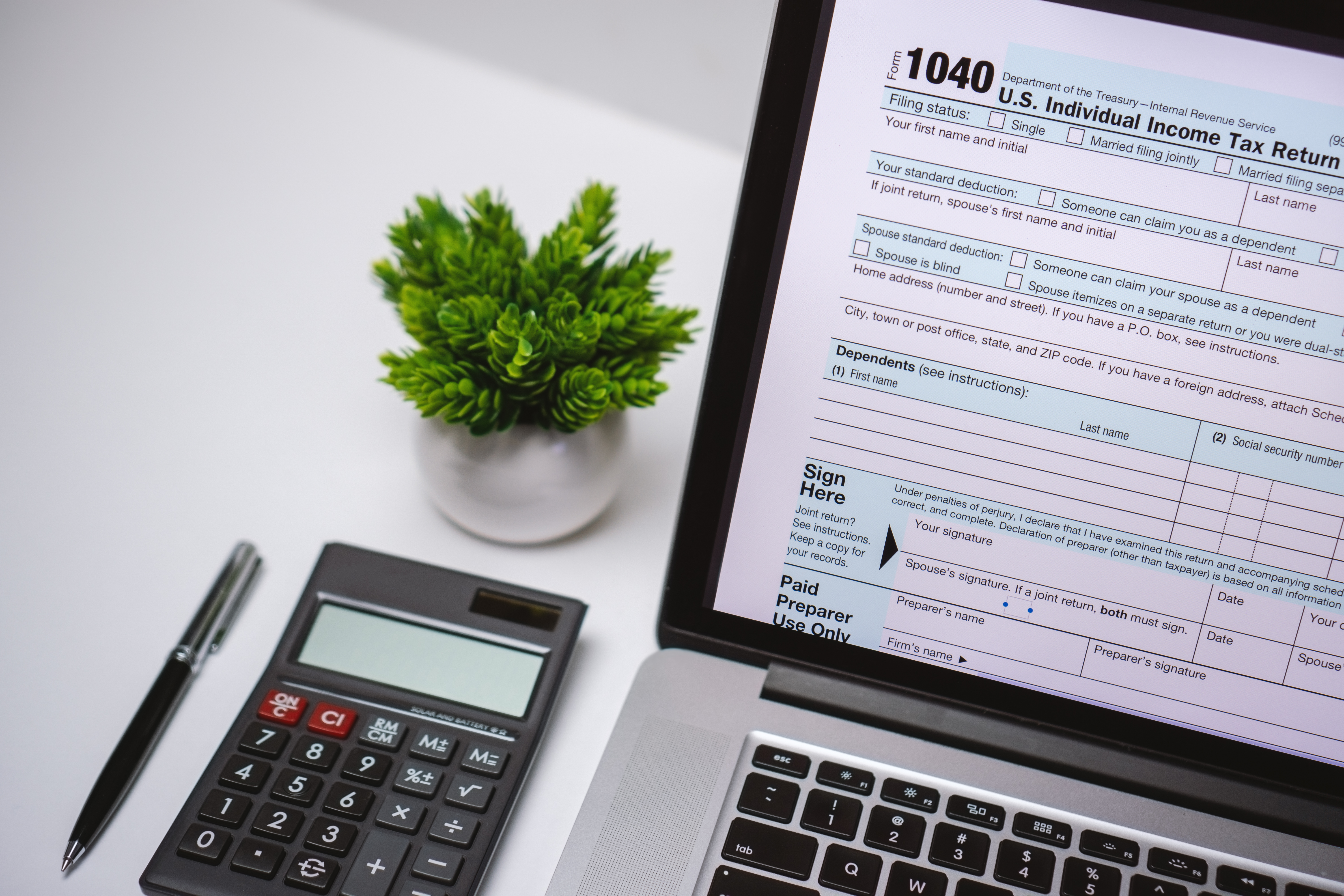
Signup + An account already exists for this email address, please log in. Subscribe to our newsletterIt’s tax season again. But this year, as you gather your W-2s and 1099s, you’re also navigating the first filing season impacted by the recently enacted 2025 Trump tax law, also known as the "big beautiful bill."
With new deductions for things like overtime pay, tips, and car loan interest, plus a new Schedule 1-A, the "simple" return you filed last year might suddenly feel a lot more complicated.
You sit in your chair, eyeing the mounting pile of documents, and think: "Should I just hire someone to prepare my return?"
From just $107.88 $24.99 for Kiplinger Personal Finance
Become a smarter, better informed investor. Subscribe from just $107.88 $24.99, plus get up to 4 Special Issues
CLICK FOR FREE ISSUE
Sign up for Kiplinger’s Free Newsletters
Profit and prosper with the best of expert advice on investing, taxes, retirement, personal finance and more - straight to your e-mail.
Profit and prosper with the best of expert advice - straight to your e-mail.
Sign upDeciding whether to do them yourself or outsource your taxes depends on your situation. While filing on your own is budget-friendly and gives you a clear view of your finances, a mistake, especially given the new tax rules, could mean leaving a larger-than-usual refund on the table. And for some, there's the perennial fear of a potential IRS audit.
Do you have a complex return with different forms and schedules? Are you facing major life changes? Do you have the time to do your taxes? Here is what you should consider before making your choice.
The case for filing your own taxes
Some tax returns are relatively simple and can be done on your own without a tax professional’s help. For example, you might be fine filing yourself if you are:
- Single with one income source
- Claiming the standard deduction
- Not eligible for special tax credits
- Comfortable navigating tax software
With a relatively "simple" return, it would likely take little time for you to prepare your own. Tax preparation software will guide you through the forms.
Pro TipIf you had $89,000 or less in income in 2025, you can file your taxes for free through the IRS Free File program. (But note that IRS Direct File, a newer program available to some taxpayers for the past two tax seasons, has been eliminated by the IRS and is not available as a way to file taxes for free this year.)
Some people may be able to handle working through a more complicated return without a tax professional's help.
If you're in that boat, there are advantages to preparing your own tax return besides cost. Doing your own taxes forces you to analyze the financial moves you took during the year. that can give you insight into:
- How much money you spent
- Whether you saved money
- Your financial well-being and financial goals
And a person tackling their taxes themselves isn’t without resources.
For example, the IRS has an Interactive Tax Assistant on its website. The tool asks a series of questions and provides responses to common tax-related issues, like the tax treatment of mortgage debt forgiveness or work-related education expenses.
There can be some disadvantages to preparing your own taxes, however.
When you prepare your own return, you might not get all the tax deductions and credits to which you’re entitled.
- Maybe you didn’t know about a particular tax break because it was recently enacted.
- Or a tax break was buried in the federal tax code, where a layperson would have a hard time finding it.
- Perhaps the tax prep software you chose didn’t explain the tax deduction or credit well, or didn’t include the correct tax form.
In these and other instances, you could end up overpaying your taxes or getting a smaller tax refund.
Additionally, there’s always a possibility the IRS will flag your return for an audit (a low risk, but not zero). Most IRS audits are correspondence audits conducted by mail, but you’ll have to handle the process yourself unless you hire a tax professional to help you.
What makes a tax return complicated?
A good way to tell if you need tax help is to think about the time you’ve spent preparing your return in the past. Did it take hours and hours? Was it complicated? If so, that’s a sign you might need a tax professional.
Your return could be complex if:
You own a business or are self-employed: Navigating the now-permanent 20% Qualified Business Income (QBI) deduction and the return of 100% bonus depreciation requires precise record-keeping to maximize your savings.
You’ve experienced major life changes: Events like marriage, divorce, or a new child change your filing status and eligibility for the expanded Child Tax Credit or the adoption tax credit.
You sold major assets or investments: Selling a home, a business, or stocks triggers capital gains rules that may be offset by 2026 inflation-adjusted thresholds or specific asset write-offs.
You manage rental properties or diverse income streams: Collecting rent or receiving income from "side gigs" can involve complex expense tracking.
You earned significant tips or overtime pay: Under the 2025 law, you may be eligible to exclude up to $25,000 in tip income or $12,500 in some overtime pay from your federal taxes — but only if you meet specific occupation and income phase-out rules.
*These are just some examples; many factors can make a return "complicated."
Choosing the right tax professional
A tax professional is someone who specializes in understanding tax laws and helping individuals or businesses meet their tax obligations accurately and efficiently.
However, if you’ve decided to hire help, it’s important to know that "tax professional" isn't just one job title. Depending on their credentials, different pros offer different levels of service and protection.
Certified Public Accountant (CPA): Licensed by state boards, these pros must hold an accounting degree and pass a rigorous national exam. They provide comprehensive tax preparation and year-round financial planning. Representation: They have unlimited rights to represent you before the IRS.
Enrolled Agent (EA). Licensed by the United States Treasury Department, EAs must pass a three-part federal exam covering all aspects of the tax code. They are tax-law specialists who focus specifically on preparation and tax resolution. Representation: They have unlimited rights to represent you before the IRS.
Tax Attorney. Licensed by state bars, these professionals hold law degrees and specialize in high-level legal complexities, such as corporate taxation or estate law. Representation: They have unlimited rights to represent you and are the best choice for legal disputes or Tax Court cases.
Non-Credentialed Preparer: These preparers generally handle basic tax returns and often work seasonally. Unlike the professionals above, they are not licensed by a state or federal board. Representation: They have limited or no rights to represent you before the IRS in the event of an audit.
These professionals are trained to know the ins and outs of the federal tax code and stay abreast of new law changes that take effect in any year.
Tax TipTo verify a tax professional, the best place to start is the Treasury Department's Directory of Federal Tax Return Preparers. This is a searchable database that allows you to confirm if a professional is currently in good standing with the IRS.
How to find a tax pro
When searching for a tax professional, think about your circumstances. Sometimes you need a nuanced approach to your financial life.
- For example, your tax situation can change as you hit different milestones.
- Parents may need help maximizing child and family tax credits, while retirees often benefit from an expert eye to manage the complex tax rules surrounding pensions and RMDs (Required Minimum Distributions).
- If you’re a self-employed business owner, your tax needs are different from those of a business owner who elected a corporate structure.
Ask your candidate where they concentrate their practice.
As for where to find a tax professional, you may have family, friends, and acquaintances who use one. Ask them. As mentioned, you can also search official, trusted directories, like:
- IRS Federal Tax Return Preparer Directory
- Your state’s Board of Accountancy
- Your state’s CPA societies
Never use a "ghost preparer" who refuses to sign your return. If they don't sign it, the IRS considers it self-prepared, and you are liable for any mistakes.
Bottom line? Hiring a tax professional comes with a price, but filing a timely, accurate tax return that could save you money could be worth it.
Read More
- Trump 2025 Tax Bill: What’s Changed and How it Affects Your Taxes
- IRS Income Tax Refund Schedule 2026
- A Free Tax Filing Option Has Disappeared for 2026: Here's What That Means for You
- The Age When Most Taxpayers Hire a Tax Pro
 Roxanne BlandTax Writer
Roxanne Bland, a self-styled “tax nerd,” has worked in the tax field for over 30 years as a state tax legal analyst. Before joining Kiplinger as a tax writer to help ordinary people make sense of their federal and state tax obligations, Roxanne spent many years covering developments in state tax jurisprudence at the U.S. Supreme Court and worked closely with state revenue agencies to develop uniform tax legislation. She has also contributed to Tax Notes State, a Tax Analysts publication focusing on cutting-edge corporate tax issues.
Latest-
 Trump $10B IRS Lawsuit Hits an Already Chaotic 2026 Tax Season
Tax Law A new Trump lawsuit and warnings from a tax-industry watchdog point to an IRS under strain, just as millions of taxpayers begin filing their 2025 returns.
-
 Quiz: Are You Ready for the 2026 401(k) Catch-Up Shakeup?
Quiz If you are 50 or older and a high earner, these new catch-up rules fundamentally change how your "extra" retirement savings are taxed and reported.
-
 Can I Deduct My Pet On My Taxes?
Tax Deductions Your cat isn't a dependent, but your guard dog might be a business expense. Here are the IRS rules for pet-related tax deductions in 2026.
-
Trump $10B IRS Lawsuit Hits an Already Chaotic 2026 Tax Season
Tax Law A new Trump lawsuit and warnings from a tax-industry watchdog point to an IRS under strain, just as millions of taxpayers begin filing their 2025 returns.
-
Can I Deduct My Pet On My Taxes?
Tax Deductions Your cat isn't a dependent, but your guard dog might be a business expense. Here are the IRS rules for pet-related tax deductions in 2026.
-
 4 Ways Washington Could Put Your Retirement at Risk (and How to Prepare)
Legislative changes, such as shifting tax brackets or altering retirement account rules, could affect your nest egg, so it'd be prudent to prepare. Here's how.
-
 2026's Tax Trifecta: The Rural OZ Bonus and Your Month-by-Month Execution Calendar
Real estate investors can triple their tax step-up with rural opportunity zones this year. This month-by-month action plan will ensure you meet the deadlines.
-
 Have You Aligned Your Tax Strategy With These 5 OBBBA Changes?
Individuals and businesses should work closely with their financial advisers to refine tax strategies this season in light of these five OBBBA changes.
-
 Ask the Editor, January 30: Questions on Social Security Benefits Taxation
Ask the Editor In this week's Ask the Editor Q&A, Joy Taylor answers questions on the taxation of Social Security benefits
-
 Don't Overpay the IRS: 6 Tax Mistakes That Could Be Raising Your Bill
Tax Tips Is your income tax bill bigger than expected? Here's how you should prepare for next year.
-
 Oregon Tax Kicker in 2026: What's Your Refund?
State Tax The Oregon kicker for 2025 state income taxes is coming. Here's how to calculate your credit and the eligibility rules.